Tuesday, July 22, 2014

TRT 100 - Retirement Race

While any ultramarathon is a daunting endeavor, the 100 miler is a special personal challenge. You cannot escape that it will hurt and you will be out there in the mountains for a day or more. What tacks on specific significance is knowing it might be the last one you ever run.

After more than two years (and potentially up to 5 years) of intense stomach problems due to a “bacterial imbalance” in the digestive system, I have resolved that I will not continue to run ultramarathons if I have this condition. One of two things will happen: Either I will get over this by living in a different environment by digesting different local bacteria and sorting it out, or I will visit a specialist – again – and get it rectified. Unless either of these options provide a solution to the sloshy, frothing, turbulent gut that has plagued me for years, I will no longer subject myself to discomfort and ultimate failure on the trail. The cost is too high. As a father, husband, and career man, my time on the trail is valuable, and when repeatedly it ends in pain, health problems, and failure, it is time to assess the limits of what is worth my time and effort.

Coming off a year of dedication, incredible training, and stellar racing only to have the pinnacle event – Comrades – end in failure, left me unable to be motivated through June and July. Couple that with leaving South Africa, traveling around the US and to foreign countries, living out of suitcases in crowded houses, and trying to get shopped, shipped, and sorted for a move to Qatar, it left little doubt that my “running” was merely just going through the motions. I did manage a weekend of 16/20 milers. The next week I jumped in the Volkslaufe in Frankenmuth and finished 17th overall in a barn-burning 20K. My time of 1:15:59 was not amazing but very solid for no speed. Unfortunately I missed the age-group stein, finishing 4th (when I could have won one in either the 5K or 10K).

Come race week I didn’t change my life – no added rest, no eating healthier, no more hydration than usual, didn’t abstain from beer. I just went about my business and boarded the plane. My suitcase contained, shirts, shorts, shoes, and socks. I left the Band-Aids, body glides, baby powder, sunscreen and the 1000 other items recommended for an ultra at home. This was going to be a Spartan event, just me in the woods. No tricks or gimmicks. Just relentless forward progress or bust. Throw in the fact that I had diarrhea for the 5 days prior to the race (from my typical stomach problem or my travels South of the border, I can't say), and you have a less-than-ideal pre-race plan. So be it.

My pre-race follies and preparation are not all that unusual if you consider why I was coming here in the first place. For years I have avoided the Tahoe Rim Trail (TRT). It is all but uncrewable and pacers cannot run in front of the runner. You are really alone. Perfect for a guy who wanted one last go at the 100 but no pity form family, no sympathy, no car to get into and quit. Just carry on. And do it with someone else. Enter Michael. My tried and true pacer from years back will run his first 100 with me. We will leave the wives at home, hit the line together, and embark into the great adventure of the wilderness. If one drops, he sits for a day waiting for the other as punishment. We have no bail plan.

Michael went and screwed it all up. With a new house and an uneasy job situation, his training flagged, and flagged is an understatement compared to what it had been the last few years. He didn’t do the work and although his repeated intentions to pony up were good, he admitted in May that his race was over before it started. He offered to pace but I was torn. The purpose was to go at this alone. No excuses. Would a person out there assist in finishing or assist in quitting? I didn’t want that. After a few weeks of self-debate, I relented and invited him to join. This takes us to July, 2014.

Any good runner will tell you to never check your bag on the way to a race. I didn’t, but once I landed in Chicago, they told me they were no longer accepting any bags on the plane and I would have to check. Connect to LAX and on to Reno. Sure enough, the bag is missing. Of course. It arrived a day later. Resolved to finish this no matter the walking and struggles, I set off on the morning of July 19th, my 34th birthday, at a conservative effort. I immediately walked up the first hill while everyone else ran. In fact, I walked EVERY hill in the first 35 miles. I was not leaving anything up to chance. If my body was going to fail on me, it wasn’t going to be as a result of going out too hard or not eating/drinking enough. After 7 miles and just above the first aid station (Hobart), we crested a ridge and were graced with about the most beautiful site in the world: Lake Tahoe from the East at dawn. I was so enamored that I frequently slowed to a walk just to look at the view. Snow-capped mountains in the distance gleamed pink in the early morning light, rising high above the massive blue span of the lake (I can't find an image on Google that comes close).

While the first 6 miles were largely uphill, the next 5 were mostly downhill. I attached to a group of 10 or so people and we worked our way down the single track trail. Arriving in Tunnel Creak, all systems were go. My next few miles proved difficult as we rolled downhill quickly over the course of a couple of miles. Finally reaching the basin and lowest point of the course (6,800FT), we climbed up a step grade. Most people elected to slam the downhill only to die on the climb. I opted for a conservative descent with 89 miles to go and climbed well, catching back up to those who left the aid station earlier than myself. Once we hit the Red House, we climbed again before running out a few miles to the final climb: the ascent back up the sandy path to Tunnel Creak. The temps were rising and I drank a 24oz bottle on the way to the Red House and half another on the way out.

Arriving back at 17 miles, I was down about 5 lbs from my pre-race weight. Determined to not let this be a problem, I drank 16 oz and ate on the undulating path to Bull Wheel at the top of the ski mountain. We were now 20 miles in and had 10 miles to the next aid spot. The trail climbed up and around the mountain and then dropped very heavily back to the lake. Much of the last 7 miles of this leg were downhill, mostly with hard switchbacks and large rock jumps for mountain bikers. My legs and body were growing tired of the descent, though the loss in altitude brought more oxygen (and higher temps). Rolling into Diamond Peak aid station (mile 30), I met Michael for the first time. Not feeling 100% but optimistic that my pace had been relatively safe (6 hours for 30 miles) I was looking forward to the next 20 before meeting Michael again. My weight was only down ½ lb from 13 miles previous, a great testament to my efforts to hydrate and eat.

How quickly the tide turns. From the lodge, we immediately started up. The next segment gained more than 1800ft in 2 miles. It was a hellish ski mountain that started steep (everyone walked) and got more intense in the second half. My early pace was conservative as I received beta to not push the hike. 50 min was the average estimate for the climb. I tucked in. Within 10-15 min, I was slaughtered. As the slope steepened, I began to grow weary. I stopped to rest before soldiering on. Soon I was weaving on the climb, losing ground in the sandy path with each step. To stop on the climb meant a sudden dizzy feeling and a leg twinge of crap on its way. After reaching about 2/3 of the climb, I sat on a rock in the shade, hoping my heart rate would return to normal before continuing. My head started spinning and I had to lower myself to the ground to prevent rolling down the mountain and hitting my head if I passed out, which almost happened. Clearly I needed to keep moving. Each false summit yielded a huge climb ahead with runners strewn about the climb, some going up, others hunched over. I could barely move and about 50 people passed me. In the final 100 meters of the climb I was unable to speak. The climb had taken me 68 minutes to travel 2 miles – the hardest 2 miles I have ever encountered outside of mountaineering. I stumbled over the top and inched down the short trail from the top of the ski lift to the aid station. My answer was a mute groan with the volunteer asked my number upon entering.

Offered a seat in the shade, walked over and inadvertently kicked a root or rock. Instantly my right calf muscle locked up and I went stumbling forward. My water bottle flew in the air, pack thudded to the ground, and I lunged for the Tupperware box housing supplies. I screamed and tried to set my leg in a position it would release but I could not get the leg to relax. Nearly in tears I inched it back over the course of a minute and it relented eventually. Exhausted, I stumbled into a chair and lowered my head. A physiotherapist was there and she helped to refuel me. I explained my history and she put me on the cot to tape my leg. Determined that the climb was a low point, I agreed to soldier on. I had been in the aid station 30 min. My pace for the last two miles was 45 min/mile.

Limping down the trail, I remained optimistic. My leg did feel better and I figured an easy 3 miles to Tunnel Creek would reward me. Running was difficult on tired legs and soon the uphills were killing me. Heat would wash over my face and I slowed to a crawl. At 1 mile into the 3 mile leg, I vomited. Running was done. It was the beginning of my issues. The legs cramp because they are not getting the nutrients. The liquids I take in just sit and when trying to add the salts and electrolytes to avoid the cramping, the stomach goes sloshy and vomiting occurs. It is the same every time. Inching along, I vomited again at mile 2 of the leg. Things were hurting and going poorly. I tried to drink and threw up again. People were very helpful, always asking what I needed and offering help. Most I waived on but a few I accepted their tablets and pills. Stumbling into Tunnel Creek, I had covered 35 miles and was in deep, deep trouble. The previous 5 miles (including aid station and the ski mountain) took me 2 hours and 40 minutes, meaning I salvaged 3 miles per hour for the last hour, the only real “downhill” segment of the course so far.

Weaving though other runners and volunteers, I crashed down onto the medical cot. Five minutes later a doctor came by and asked how I was. We discussed my downfall and my history, including the repeated cramping, failures, seizure, and dehydration. He was concerned and started the testing. My pulse was 98 after walking most of the last 3 hours and my blood pressure revealed why: 86/50. This was the lowest I have every tested. Due to not peeing in 6-7 hours, the doctor took blood and ran some tests. My kidney functions were non-existent. I was informed that I would need to eat, drink, and pee before being allowed to leave. Two Dixie cups of Coke/Water (4 oz) were manageable but I couldn’t drink my bottle. An anti-nausea med was administered but I wasn’t nauseous so much as empty. I lay in that tent for an hour and the doctor said I was looking pretty bad. He said he wanted me started on an IV. Of course, this is grounds for disqualification.

I had promised myself I would not quit. I would have to be pulled by aid stations or a doctor and I was. The thought that I couldn’t walk on the entire way and finish the race in the time frame is inconceivable to the normal mind. But once the body has gone this far into the hurt locker, even the most ridiculously slow paces cannot be managed. The body refuses. The mind cannot overcome the failure of its carrier. They wouldn’t pull me at Bull Wheel (not that I wanted to walk down that stupid mountain again) but they did at Tunnel Creek). It is a good thing too as it was 5 more miles to Hobart and from there, an additional 6 to the start (or 10 the long way to 50). I took in a litre of saline solution but really didn’t feel any better. The reassessment showed my pulse at 62 (8000feet) and my BP at 105/71, a significant improvement. I was deemed suitable to live and just had to remain in the aid station for 90 min until a transport could be arranged. Thankful to be alive, I bounced down the road in an SUV for 30 min back to the start. The next few hours and days brought the normal sorness after an ultra. The IV sure helped the head and stomach, but the legs had that familiar tenderized feeling. However, considering it was the slowest 35 miles I have ever run, the question was, why was I so sore? The answer is obvious when looking at each of the failures over the past few years.

Disappointed? Yes, but not with the result. I am devastated there is something wrong with me, something that does not seem to be clearing itself nor responding to medication. This has to change. If this is my retirement from ultra running, so be it. As a Leadville and Western States finisher, I can live with that. But what I cannot accept is that this problem will limit every endeavor from now on. What if this keeps happening earlier and earlier as it has? Soon it will affect my marathon. I want to climb mountains and ride bicycles. Both will require me to go over 5 hours. I cannot afford to let this go unchecked.


Sunday, June 1, 2014

Comrades 2014

or the race that never happened in my book...

The story of my latest 100 miler attempt starts with Comrades. After all, Comrades 2014 was what this year was supposed to be all about. I had trained so hard, sacrificed so much, all in the attempt for the elusive silver medal. My prep and arrival were ideal, but it was not to be. My entry is late to come due to not wanting to relive the tragedy. But in order to prepare for the future, we must study the past.

Roused by the typical start line energy and experiencing lower temps than 2013, everything started according to plan. Fearing too fast of a start, I began splitting each kilometer on my watch to be certain I did not burn out. In the dark of Pietermaritzburg, this proved to be a daunting reminder of how long the race actually is, but I was hitting just under my desired pace, so all was according to plan. Resolute not to let anyone run my race for me, I still managed to hook up with a man from Israel. He, too, was attempting his 4th Comrades and did not yet get silver.
No problems at table 1 as I take my water bottle from a club member.  See Israel in the back ground (blue).


We rolled on, hitting the desired pace. I was determined to walk at prescribed points and did while he preferred to run straight on (perhaps his problem), which caused some chase games for a while. I continued to be on pace although we separated in the run into halfway when I walked up part of Inchanga, catching and passing him at the top when he stopped to pee. From then on, I was alone. My halfway split of 3:37 proved to be a bit faster than I wanted but not too fast, and it allowed me to walk much of the nasty climb out of Durmmond. I passed 50K with no problems, still well on pace. Coming over Botha’s Hill, I felt funny, and pulled up to speak with Lindsey Parry, Comrades Coach and one of my training partners, expressing my fear that it wouldn’t hold up. He assured me it would and sent me on.

Within 2K I was suffering. A small hill left me in pain and feeling heat flashes. I was weaving as I walked. I soldiered on but running was becoming a chore. I went from sailing along at under 5 min/K to barely running a few hundred meters before stopping to walk. The more I did, the less I could run. By the Green Mile – the point on the course with perhaps the most energy from the spectators - I was taking ice massages and walks through the whole thing. My jogs shortened from a few minutes to a few seconds, and the cramping in my legs was incessant. Stumbling through Kloof I hit the pavement and had to be stretched by volunteers for about 10 min. Barely able to stand, I was encouraged to keep moving, though I wanted to bail. For the next kilometer, the course meandered slightly downhill – a feature welcomed by most but for me it was unrunable. I couldn’t even jog without cramping. I stopped with 24K to go. In my mind I knew that at the 23K mark the road dropped for 3K down Field’s Hill which is torture even on a good day. For me, it would be the end.

I hitchhiked a ride to the finish and despite two massages, still looked and felt like death. I was in worse shape after my 39 mile effort than I had been in any of the previous 54/56 mile efforts. Something was seriously wrong with me. It seems as though any running past 35 miles or 4.5 hours does me in. Has it always been this way? No, I could do WSER on tri training. So what has happened? Since the stomach issues of Victoria Falls two and a half years ago, I have been unable to go weeks without stomach pain, liquid fecal matter, or finish a long race (well). Last year’s Comrades was total muscle failure around 60K. I DNF’ed at Burning River 100 at 65 miles (but effectively stopped running around 50). This year the problems hit hard 55K in and that was it. My fatigue and reaction are nearly instantaneous. One expects the body to go through highs and lows in an ultra, but what I am experiencing is not a cycle but a shutdown and it happens much faster than a normal depletion of energy and onset of muscle fatigue should. I am now seeing that many of my struggles in the past 2 years are due to this issue, and question if it doesn’t date all the way back to the onset of the 2nd Leadville 100 I attempted. What I do know is that unless it clears, this is a futile journey.

Monday, April 21, 2014

Boston Marathon 2014


It has been a solid few months. In January, we returned for the annual, "Jack Daniels"/Welkom Meilie Marathon.  A pounding effort on both fronts.  While my race went well for the first half, around 23K I felt a pull, and by 25K my leg (calf) was prominently stinging.  Then we hit the dirt.  For 5K I limped and leaped over washboard dirt road trying to keep pace with Kirsten who decided to speed up and attack here. Once off the dirt, I stopped, walked, and tried to stretch.  When the knot didn't go away, I waved Kirsten on.  But soon I was running again, solo, and managed a solid pace.  It never really got worse.  Kirsten chirped a few people and we finished a minute apart, with my 2:53 flat good for 14th place (2:55 for 7th the year before, thank you very much prize money increase). While taking the mandatory anesthetic of JD, I learned my leg hurt, bad. I did not run for four days.

Since Christmas, I am injury free, not counting the minor post-Welkom setback. No problems there.  My weekly Thursday efforts from January to March posted in at 16+ miles each time.  I logged about 8 marathons in the past 3 months and have kept a relatively decent mileage, for me anyway. Things were on track.  Then Murphy's Law.

My car died, my grandfather died, stress at work, stress at home, stress with the new job requirements and I got sick.  A nasty, punishing head cold and chest infection that kicked my arse.  Then, just as I started to beat that, my nastiest, most painful bout of stomach cramps yet.  I immediately hit the Flagyl, that horrible, death pill, and after 5 days found my stomach abating, only to see my cold linger (what wipes out the bad wipes out the good).  With deep depression on the way, I resolved that my somewhat arbitrary goal of 2:45 at Boston was no more.  It would have taken a perfect day.  While my miles were good, I had been sick, done no speedwork, and who knows what 20 hours of travel and Boston weather would do to the race day effort?  Rather, I resolved to go in, shoot for a PR, and see what happened.

Faced with the option of laying around all day or getting out and being active, I followed up a run through the park with a trip to the delightful Sam Adams brewery. This lively and sarcastic tour gives history to the revolutionary revitalization of craft beer in America. A lunch, nap, and killing time before an evening movie and rest.

Jet lag had me up at 2:30 a.m. where I kill the next few hours till daylight. The waiting is the hardest part.
There is so much hype here it is hard not to get over-excited. The memorial outside of Marathon Sports near the finish line and along the church is reminiscent of visiting ground zero. While only 3 people died in the bombings here, for some reason - maybe because it's supposed to be a fun event - people take this like it's a rally cry for freedom. If there's one patriotic thing you can do aside from being a part of our armed forces, it is to come run the 2014 Boston Marathon on Patriots Day. 

The rest of the story is captured here in an article done in my hometown:


I enjoyed Boston more than any other race I have done.  But now it is time for Comrades.


Taken from baa.org

PEOPLE

  • 36,000 Official Entrants
  • 80,000 People attending the Expo
  • 10,000 Volunteers
  • 1,900 Medical Personnel
  • 3,500 Security Personnel
  • 68 Race Officials
  • 250 Ham Radio Operators
  • 1,500 Boston Police Officers
  • 3,500 Total Uniform Police Officers
  • 450 State Police
  • 600 Members of the National Guard
  • 250 people in the Multi-Agency Coordination Center at MEMA
  • 61 agencies and organizations in the Multi-Agency Coordination Center at MEMA

COURSE

  • 36 Course Clocks
  • 11 Participant Timing Locations
  • 26 Red Cross Stations
  • 24 Hydration Stations
  • 80 Volunteers at each Water Station
  • 8 Elite Athlete Water Stations
  • 640 Elite Fluid Bottles

EQUIPMENT

  • 265 Two-way Radios
  • 66 Frequencies
  • 21 Repeaters
  • 6 Cross Band Repeaters
  • 63,360 Feet of Rope
  • 30,000 Feet of Fencing
  • 65,000 Feet of Electrical Cable
  • 10,000 Trash Bags
  • 50,000 Cable Ties
  • 1,765KW of Electrical Power
  • 1,200KW of Electrical Power for Media
  • 9 Million BTU's Temporary Heat
  • 2,000 Tables
  • 9,000 Barricades
  • 200 x 2 Inch Tape/Rolls of Caution Tape
  • 10 Fork Lifts
  • 25 Scissors Lifts
  • 790 Port-o-Johns at start
  • 202 Port-o-Johns along course 

SUPPLIES

  • 350 Rakes and Shovels
  • 600 Trash Barrels
  • 400 Rolls of Paper Towels
  • 108,000 Safety Pins
  • 75 Shuttle Buses in Hopkinton
  • 730 B.A.A. Official Buses
  • 140 National Anthems and Countries' Flags
  • 39,575 mylar blankets (heatsheets)
  • 25,000 Feet of Ribbon
  • 5 Command Posts
  • 220,000 Sponsor Brochures
  • 36,000 Participants' Tee-Shirts
  • 36,000 Participants' Bags/Packets
  • 36,000 Finishers' Medals
  • 400 packets of Handi-Wipes
  • 1.4 Million Paper Cups
  • 140,000 Sponsors' Samples
  • 35 Golf Carts
  • 50,000 Drywall Screws
  • 600 Sheets of Plywood
  • 1,000 Pairs of Work Gloves
  • 4 electronic finish line cameras

MEDICAL

  • 500 Bags of Ice
  • 800 Cots
  • 1,500 Blankets
  • 500 Tongue Depressors
  • 500 Sick Bags
  • 4000 band aids
  • 175 Ace Bandages
  • 1,500 Gauze Pads
  • 2,000 Adhesive Bandages
  • 250 Rolls of Moleskin
  • 500 Tubes of Petroleum Jelly
  • 400 Towels
  • 900 Intravenous Bags
  • 26 Oxygen Tanks
  • 25 EKG Machines
  • 40 Defibrillators
  • 150 Blood Pressure Cuffs & Stethoscopes
  • 80 Thermometers
  • 10,000 Pairs of Medical Gloves
  • 200 Bottles of Antiseptic Handwash
  • 5000 Emesis Basins
  • 2,000 Tubes of Antibiotic Ointment
  • 30 Ice immersion tubs

COLLATERAL MATERIAL

  • 76,000 Envelopes
  • 36,000 Welcome Brochures
  • 36,000 Adidas Brochures
  • 36,000 Runner Passports
  • 41,000 Confirmation Acceptance Cards
  • 144,000 Safety Pins
  • 33,000 Lanyards
  • 18,000 Credentials
  • 1,500 Vehicle Placards
  • 4,750 Sign, Banners, Flags
  • B.A.A. CHARITY PROGRAM

    • 30 Official B.A.A. Charities
    • 1395 Total BAA Charity Runners
    • Fundraising to exceed $12 million

    ECONOMIC IMPACT

    • Boston Marathon generates an estimated $142 million for the local economy

    VEHICLES

    • 31 Bicycles
    • 31 State Police escort vehicles
    • 12 Boston Police escort vehicles
    • 26 State Police escort motorcycles
    • 11 Transit Police escort motorcycles
    • 10 Quincy Police escort motorcycles
    • 12 State Police Cruisers & security vans
    • 2- BMW sponsor vehicles
    • 2 TV motorcycles
    • 2 TV trucks
    • 110 Course Vehicles
    • 18 Vans
    • 3 B.A.A. motorcycles
    • 1 BAA Motor Scooter
    • 815 Buses
    • 34 Medical Buses
    • 5 Lifeguard Stands
    • 60 Delivery Trucks

    FOOD

    • 11,300 Pounds of Pasta
    • 2,825 Quarts of Tomato Sauce
    • 3,400 Pounds of Fresh Vegetables
    • 100 Pounds of Ground Black Pepper
    • 35,300 Powerbars
    • 34.656 Packets of PowerGel
    • 17,000 Cups of Coffee/Tea
    • 5,250 Gallons of Boiling Water
    • 5,225 Hours of Preparation & Cooking Time
    • 400 Waiters/Waitresses Including Chefs
    • 35,000 Gallons of Poland Spring Water
    • 2,500 Wellesley College students have served pasta to the runners over the years at City Hall
    • 15,000 chocolate Easter bunnies for dessert
    • 97,200 Hershey’s Kisses

    MEDIA

    • Over 300 Outlets Receiving Credentials
    • More than 1800 Media Credentials Issued
    • Over 100 Print Publications Receiving Credentials
    • Over 100 Television Stations Receiving Credentials
    • Over 30 Radio Stations Receiving Credentials
    • 10 News Agencies Receiving Credentials

    AWARDS

    • 107 Awards
    • 27 Hours to pack all the awards for shipment
    • 200 Pounds of glass melted to produce awards
    • 91 Trophies
    • 8 Unique Designs
    • 325 Pounds of Glass
    • 140 Hours to Produce
    • 9 Days to Create Stencil and Etch Awards

    RED CROSS ALONG COURSE

    • 325 medical / admin volunteers
    • 2,000 combined volunteer hours
    • 120 ham radio operators for course medical communications
    • 1,000-2,000 runners, spectators assisted every year along the course
    • 31 bottles Antiseptic hand gel
    • 104 boxes Gloves
    • 52 bottles Sunblock
    • 31 boxes Antibiotic Ointment
    • 5,000 Bandaids
    • 1,500 Gauze Pads
    • 250 Ice Packs
    • 52 Heat Packs
    • 400 pads Moleskin
    • 52 tubes Sports Cream
    • 150 pounds Petroleum Jelly
    • 52 rolls Paper Towels
    • 52 boxes Tissues
    • 52 Trash Bags

Monday, January 6, 2014

No News is Good News, And Some Good News


Budapest, Hungary
Budapest - Danube River

Bratislava, Slovakia

Bratislava Trail
Amazing trail in the hills of Bratislava.
Crystal clear mountain lake, Slovakia


Disturbing Statue #1
Disturbing Statue #2
Prague, Czech Republic
A jog across the Charles Bridge, Prague


Where has the time gone? Last I wrote, two early season marathons were in the bag and everything was looking up. It hasn’t been so simple. Immediately after writing I threw out my back after a run and was unable to compete in my third marathon of the “fall season”. I feared a stress fracture but it turned out to be muscular. Once running again, I started joining my training buddies for the weekly 27k time trial (22k of running before the group 5k). That will put some hair on your chest. While still relatively fresh in the training, I laid down my best time on the run to work, an 8-mile effort over the hills and along the crazy road.

I bounced back for the Tough One, a 20 mile race through the hardest hills my neighborhood has to offer. Constantly climbing or descending, the race is unrelenting. My effort was marked as conservative for the first part, trying to make sure not blow out early. I crossed the half marathon mark in about 1:28, cooking considering the hills. The next 6Km were almost entirely uphill, so I had to give back a decent amount of time. Legs toast, I pushed on in for a 2:13:25, good for 6:40/mile (2:54:48 marathon) over those hills. I was happy with this time, but it left me a bit slow for a couple of weeks.

Then it all went south. A pulled calf muscle left me limping for days, taking rest days periodically to shake it. Bronchitis set in, limiting my running. And the job hunt came to a head leaving me exhausted, stressed and lost. My running suffered for a week. But I got a job and flew to Europe where I embarked on a 1-hour per day plan to maximize my fitness while on vacation. Last year I managed a measly 30 minutes on a treadmill in Egypt. But this year I have decided to double that, and with most of it in some really amazing locations, it hasn’t been hard (just cold). My goal this year is to do more running than last year – not in marathons or long runs, per se, but to be more consistent and strong during the week. I will skip the weekend single and occasional double marathons in place of a 20 miler and a 15 miler, as long as those runs are strong and allow me the recovery to go out and put in about 17 miles on Thursdays and another 10 on Tuesdays. It is here where I hope to improve my overall fitness. I am sure I will still jump in the occasional 42KM effort.

Last year from November to December I ran 245.26 miles which is 40.9 miles per week. This year during the same period I have put in 329.35 miles or 54.9 miles per week. At 14 mpw more and nearly 90 miles more under me, I am on my way to my goal of a stronger me.

This year I am running the Boston Marathon. I couldn’t resist going back to Boston after the attacks last year and I am excited to be a part of one of the world’s greatest races again. I originally thought I would go there to race but now I want to stay focused on Comrades training. I will still put in a very solid effort and since my PR is not strong, I could get it by ultra training anyway. It will just depend on the travel and weather. More on this later. Comrades, of course, will be the defining effort. I MUST get silver this year or I may miss out on my chance to own one as we are leaving South Africa in June.

To cap it off, I won a lottery spot for Tahoe Rim Trail 100 miler in July. Michael and I are in! More on this later. Have some work to do first.

Sunday, August 25, 2013

Mandela Day Marathon

The Mandela Day Marathon commemorates South Africa’s first black president by running a race from a site in Pietermaritzburg where he gave his last political speech before imprisonment to the site where he was ultimately captured in the hills beyond Howick.

There were many indications that I was in an African race. I parked in the stadium near my hotel and boarded a minibus. The experience gave me a true appreciation for all of the people who daily queue up for rides home every day. After a long wait, we finally filled up and rolled off toward the start line which happened to be in a township.

Time to Starting Gun (1:00=1 hour, :58=58 min, etc.)

1:00 – People are warming up by doing plyos and sprints in the corral. That is with an hour to go.

:58 – People mob the corals reenacting what I can only assume are moves from Dance, Dance Revolution. Recognizing I have no rhythm, my butt remains on the cold concrete.

:48 – The first round of Shosholuza echoes through the crowd. I sing.

:44 – The barriers between the corals are removed causing the crowd to surge forward and initiating the steady flow of people pushing and cutting their way to the front. With three-quarters of an hour to go everyone is jammed up. I am at the very back having stepped out to take a pee at the moment this happens.

:38 – A taxi bus, carrying what I can only assume are elite athletes or dignitaries of the race, has made its way up through the corral toward the start. It is now 100m from the line and progress has halted. Immediately rivers of urine begin to flow past my feet.

:36 – Bus is moving again. I have tucked in behind it to move closer to the front. Looking at my reflection in the back window I notice the large stripe of toothpaste residue on my chin from brushing. It has only been 2 hours and a couple of hundred people since that happened. Classy.

:24 – Violence is breaking out. Runners refuse to move. The bus honks its horn. Runners revolt and pound on the bus. Race organizers plead for compromise over the loud speaker. I wonder if this is what Mandela would have wanted.

:18 – Sanity prevails and the car pushes through. People relax as a man hangs from the start line scaffolding and screams into the crowd. I am reminded of the ride in as we moved past shebeens (shebeens are most often located in black townships as an alternative to pubs and bars, where under apartheid and the Rhodesian era, black Africans could not enter a pub or bar reserved for whites – illegal alcohol was usually sold). I think maybe he was there recently.

:14 – Round 2 of Shosholuza breaks out. The national anthem follows, fists pump in the air. I notice some people sing parts of the song but not others (like the Afrikaans verse). I think it is not what Mandela would have wanted.

:05 - Round 3 of Shosholuza begins.

:03 – Dance party 2 breaks out and lasts until the gun.

Immediately I am 1000 people back and facing a monster of a hill. My first K is in 5:34 and I enjoy the slower pace. The next 5 km is a series of bombing downhills alternating with steep uphills but the paces settles to under 5:00/K (8min/mile). Hundreds of people make their way to the street’s edge in the soft dawn light to spectate. It isn’t long before we are on a main road, groups of people pack the shoulder of the road while cars and taxis race by in the other lane, inches away from the participants. To confuse matters two cows munch grass in the median of the 4-lane highway. At the next turn a cab barrels up onto the grass and over the berm, narrow missing oncoming commuters and the police officer there directing traffic, who don't even flinch. To my left a competitor blasts a snot rocket, the mist glistening in the morning sun. To my right, another runner coughs and blows his nose in his hand, then offers me a water sachet – I politely decline. I mosey on, a smile on my face with the recognition that this is Africa.

Never have I found a race that simulated the big 2 (Comrades and Two Oceans). I could have sworn I was climbing in the trees of Constantia forest or huffing over the Valley of 1000 Hills. The images of hyperactive locals emerging from shacks overlooking deep valleys and rolling hills reminded me of my favorite races in South Africa. However, the 6.5km climb starting at 6 miles proved to be both longer and steeper than either Chapman’s Peak or Inchanga. For nearly 40 min we climbed very slowly up and up, winding along the hillsides only to look across a valley to see the climb continuing far on the neighboring hills. Dead dogs lay in the ditch creating a significant stink. Finally cresting the top we returned to a normal running pace but in crossing the halfway point in 1:51, I knew there was no real chance of cracking 3:30 on the day.

I had built a nice little bus behind me and we started unloading 4:30/kilometer after halfway. However, this proved to be a bit stiff for these guys and I was soon alone. Having only run about 3 weeks at 30 miles a week since the ultra, I wanted to be conservative. With time out the window I was free to just run. I begin to focus on just passing people, catching large numbers as the race goes on. In fact, I snatch 87 people in the last 6K when people are strung out and I am tired. I was gobbling up 15-30 runners per K in the last half without being passed. From 14K in to the end I passed almost 300 people, and many more before that.
Sign marking the capture site sits below the finish line.

Discomfort, which had been benign until now, encroached in the final 2 K. This was very positive as I expected a struggle before this but was lucky. A final dirty climb pulled runners up into the field near the Nelson Mandela capture site. Instantly I walked out of the corrals and into nothing. I had no idea where to go. Eventually I made my way about 500m down the hill and into a field where buses (cabs) were waiting. I boarded one heading back to where my car was parked but we sat for 30 minutes until it was full. A bouncing, back roads journey took more than an hour to bring us back to the stadium as people kept requesting to be dropped at various stops along the way. When it was finally over, I started my 5 hour drive back to Joburg.  The best part was when I stopped for the obligatory post-race milkshake and a woman started miming running and pointing at me.  Since I was wearing a Comrades shirt, I thought she was just being silly, but then the woman next to her said, "We saw you on tv today."  I was the 4th white finisher so despite not being a hero in any form, I must have stood out on television.

Sunday, July 28, 2013

Burning River 100

 I was being eaten alive. The pain was unbearable while sweat and tears dripped down my face, attracting more of the swamp dwellers already feasting on my prone body. Locked in a v-sit position in a rigor mortis state, it was time to assess my options.

In the summer of 2008, I went for a stroll in the Ohio woods. 50 miles later, I was hunched over on a trail, throwing up, one of many bouts of vomit that day. After 30 miles of decent running, my stomach churned, food no longer was an option and I did not want to do anything other than slog on, and even that was a far cry from fun. An emergency call to my crew had them meet me in time to blow several gallons of liquid all over the road, and after limping 5 miles to the aid station, I called it quits after stiff legs and more puke determined that 50 more miles would be an awful way to spend the next night and day. Later that night while resting in a hotel room, I had a seizure from the lack of electrolytes.
Wouldnt it be nice to feel as good at  50 miles as you look at 0 miles?

Five years later I stood in front of Squire’s Castle again in the hopes of redeeming myself against this race. Coming off the best training I had ever done, I started with thoughts of a recent disappointing Comrades finish on my mind. After a 10k in the woods, all was well, though the crew would later say that I didn’t look happy and free. Something about this race from the first steps wasn’t right, a feeling I would never shake that day. The following 10K and subsequent 8k sections were full or running and road. I walked as much as I could in the attempt to reach my pacer at 55miles with lots of running left in me. At 17 miles I would never know just how impossible that would turn out to be.


Feeling decent at 26.2miles

The stretch from 17 miles to 41 (the next crew point) had many trails and the rain, which started after a couple of hours into the race, would not let up for the better part of the next 9 hours. A course that had seen record rains for the month was getting on its final weekend, another dousing. We navigated the mud, glad the sun was held back and temps were cool, a stark contrast to the 80 degrees the course normally sees. Humidity was still high due to the dampness but it would have been a lot worse if it had been hotter. Little did we know as we uttered those words, many would opt for the heat in comparison to the alternative.

By 41 miles, soaked and sour from the Heed energy drink at the aid stations, I mentioned to my crew, “I just wish I felt better at this point.” Nothing was wrong. I was making great time and had been fueling very well. But something was just not right. Over the next 5 miles I could not seem to work out what it was and when I arrived at 46.4 mi, I sat down and tried to really go deep with the fuel, eating lots of soup and other things to settle the stomach and fuel the body for the remaining 55 miles to the finish. Within 1 mile, all bets were off.

The section to Snowhill, 50 miles and halfway, was perhaps the worst section of running I have ever endured. The trail, if there was one, was a soupy mess of water and mud, dug deep with pockets from the shoes of runners and the hooves of horses. There was not a dry step in the house, and the amount of physical exhaustion to keep my balance in this area was rivaled only by the mental anguish of negotiating every single solitary step of the trail. Not one stride was wasted glancing around and enjoying the scenery. If an ultrarunner’s talent is to zone out to make the distance pass, we were in runner hell. A few twinges in my calf muscles earlier had prompted me to try and beat the cramps with food and salt at the previous aid station. But on the trail between a mud bog and a high log, they hit, and hit hard.

First my right leg seized. I looked down, watching the tendon that connects my ankle to my knee on the right side bulge in slow motion, like a scene from some WWII epic – grey skin, mud, no sound, but a grotesque view nonetheless. As I slowly bent and stretched my hand out to correct this muscular anomaly, the left leg shot pain up into my core and it too locked unresponsively. I hobbled club-footed for a few steps from left to right, sliding in the mud, before yelling out a feeble cry and tumbling headlong into the waist-high overgrowth. I cringed and lunged halfway to my feet, stuck in a bent over position, unable to move.

While waiting for the pain to subside, a guy came up on the trail but didn’t see me. Just as he reached my outstretched feet, he shouted in surprise, “Oh, I didn’t see you there,” and on he ran. Thanks, pal. Luckily, an elite woman who was having an off day came up on me. She asked if she needed someone to be sent back from the next aid station. Thankfully I denied her request as I ultimately would beat her there. But she did kneel and give me salt tablets and a pull from her water bottle, which was filled with coconut water. After slapping more bugs from my skin, I inched into a sitting then standing position, cramping the whole way. Soon I was walking, though the cramps threatened with every lift of the leg over mud or fallen tree. We walked and chatted for a while, surviving the leg, which never improved.

Between the bogged out mud sections I would attempt to run for a minute or two behind those that passed me. It never lasted very long but I made progress. Just when I thought it would never end, I emerged to the Snowville aid station and the 50.4 mile mark, halfway. Defeated, I sat in a chair attempting to eat and drink whatever possible. My watch read 9:30, which was a decent split despite the horrific last 4 miles. As I staggered down the road past the point where I had thrown up in 2008, I remembered just how long I had to limp before Boston store. Most people around me were now walking substantial portions of the course and I continued to attempt to run small sections as long as my cramps abated and energy sustained. This continued for a few miles, but soon it would become evident that this was no way to complete the day. I was slowly crashing and there was nothing that could be done about it. For the final two miles, I could no longer run, and I began to think of how I would handle meeting my pacer, struggling on for 10 miles, and finally admitting defeat to Sarah.

I pushed with all I had to jog down the road to Boston store but after 80m, it was a waste of energy. I stumbled to the curb and just started walking. Just ahead, Sarah stood on the sidewalk, calling me in. Immediately the tears came to my eyes and a feeling of disappointment washed through me. She wasn’t 10 miles ahead as planned. She was here, and she knew I was in trouble.

I plopped in the grass exasperated and began to tell Mike and Sarah my troubles. Mostly, I contemplated what was wrong with me – why was I continuing to have trouble feeling good even after fueling and pacing well? Like a good crew, they pulled me up and said to just walk on. Just see what happens. Reluctantly, I ate some food and began to walk out with Mike. We had about 3.9 miles to the next aid station and I was agreeable to try and see if things would improve, even though I was persistent that they would not. We walked for a bit and I tried to show him my problem. Amazingly, no cramps came, but the sitting and walking had left my quads shot and heavy. A mile-long hill allowed us to walk uninterrupted before gingerly jogging into the trail. We continued to chat and walk, running very brief spurts of trail when I could, which was infrequently and never longer than 30 seconds or so. While the cramps had vanished, my legs now proved to be empty. Gu and Gatorade went in but the sugars were now turning the stomach and I knew that my time was limited. We arrived at the next aid station and ate some more. Like the best crew that they are, the push was to go on. My stance was this: I can keep walking. I might be able to walk to the finish from here (I had 17 hours). But did I want to? Was that how I wanted to spend my day, walking on the trail? Plus, my concern was that eventually, the body would quit, and I would not be able to walk the prerequisite 2.5 miles per hour, making the day worthless. Can you imagine walking 55 miles only to miss some cutoff by minutes? Kill me now.

But leave we did and negotiated a mile of trail before hitting a road. While a road sounds nice, the pavement pounding on tired legs was more torture, not to mention the beauty of the trail was now gone. We could see a long way and it never seemed to end. Even the short bursts of “running” (which were now sad shuffles at about 16 min/mile) left me completely winded on the flat road. Mike later said he knew this was where it would end, watching my eyes roll back in my head with the effort. But we struggled on, down a horribly monotonous bike and hike trail, with people walking ahead and people walking behind. My feet started to feel like I was walking on sandpaper. It had stopped raining hours ago. After several miles, the feeling changed from one of scraping and rawness to a dull, almost painless throb that resembled walking with blocks of ice strapped to the bottom of my feet. None of these are good signs, and I knew that even if my body held up, my feet were on a rapid demise. As we got closer to the aid station, I put in all I had left. I led a run of about 300m around a field and parking lot, the most I had run continuously in about 4 hours. Then, with only one stretch of trail to go, I gave it a go, letting all worry and pain go and just ran. This was the best I had felt in about 25 miles, and it seems like I could have gone on another section. But I could not. The effort left me completely finished – there would be no more running that day. After nearly 15 hours, most of the last 7 hours at a walk or sloppy jog, I determined that my day was done. Another DNF.


When reflecting on it, I am not disappointed or sad. Sure, I wanted to finish the race. But not like that. I have a Leadville and Western State buckle, I know I can do this. But hiking all afternoon and night to possibly struggle in, no, I have been in the hospital enough to know that isn’t worth it. That limp, that isn’t why I run. I am not some endurance junkie that loves to go longer and harder than before. I run ultras because I love to run, and ultras let you run more. But ask me if I enjoyed this race? No. I did not love the 10 hours of rain. I hated the swampy, slick, and dangerous trail. And while pain and slowing is inevitable in any long race, to be slashed at 47 miles and have to walk the rest, that isn’t my idea of enjoyment, in any sense of the word. I let my crew push me on from 55 miles. They wanted to know it wasn’t a low point – they wanted to know I did what I could. And did I at 55? No. I couldn’t be happier to have left and completed those next couple of segments. I left it all on the trail, 100%, there was no question that I had my day and my day was done. And that is a result I can live with.


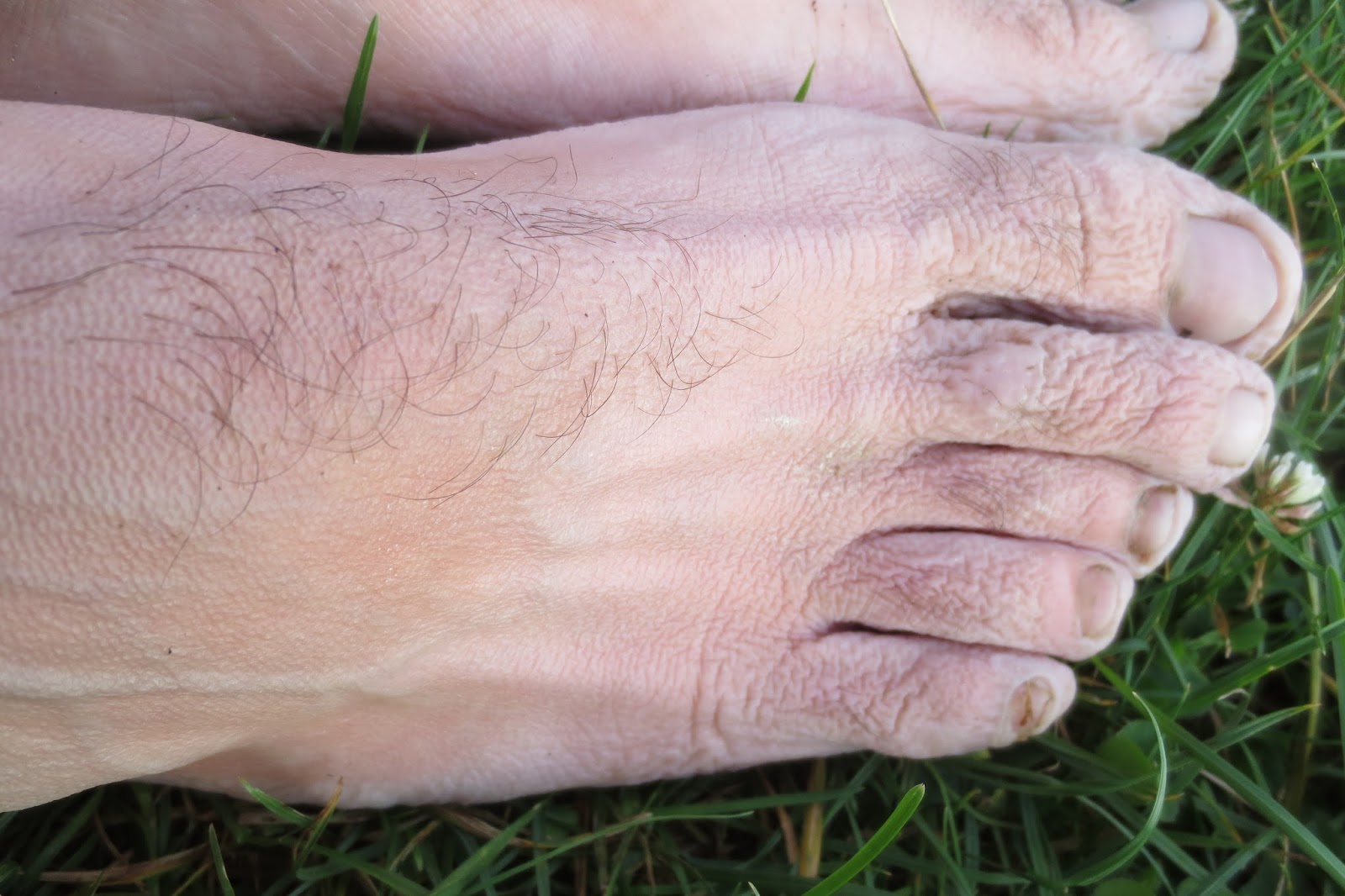
A little glimpse of the feet after dropping out.  The deep ridges represent blisters folded under other skin.


Is the 100 miler right for me? I am at a serious crossroads where I do not know if it is. I am becoming more and more interested in exploring other (shorter) distances and potentially other events, depending on where I end up living in this world. My immediate plans are to recover, build into shape, and take advantage of great weather and running partners in South Africa. I will do a bunch of marathons and go back to Comrades, possibly for Silver, but more just because I love the event. I might go to Boston this year. I will use my qualifier from WSER to enter Hardrock lottery, and if I get in, I will be ecstatic at the prospect of attempting and hopefully completing the toughest of the major races. Plus, I have completed those in the mountains while failing elsewhere. There will be no preconceived notions of time or place – it will be a finishing attempt, bar none. If not, well, let’s see how this all pans out.

Sunday, June 2, 2013

Comrades 2013

Did you ever have something go so well, only to watch it crumble before your eyes? That is the way it goes sometimes. My Comrades 2013 was the culmination of a year of hard work and 4 years of planning, but it didn’t end how I expected.

Michael and I got down to Durban, did the expo, and readied ourselves well before the girls joined. Dinner with Kirsten and some guys left us ready to rock. The morning was quick but we stood on the line for the obligatory national anthem, Shosholuza, and Chariots of Fire before we were off into the dark. It dawned hotter than anyone could want, and with sweat dripping off our bodies in the pre-dawn haze, it was a sign of things to come.

Michael, Kirsten, and I stayed together for a good 25k, up and over Cowies and Fields with no problems. I asked Michael how he was doing, and with a thumbs up he replied well, and I never saw him again. The next time I looked over he was out of sight and I was left to run with Kirsten, wondering all the while if Michael stopped to poop and would be coming back. He never did.

Kirsten and I rolled along through Hillcrest and up Botha’s Hill with ease. I felt extremely strong and confident. Kirsten looked in trouble. He kept quiet and complained that his glute was in poor shape. There were times when I thought he would abandon the race. Not that I would wish this on my training partner, but my confidence was high knowing that I was good and this great runner was not. That would change.

We hit halfway in a brisk 3:30:20, about 6.5 minutes ahead of the preset pace. While this was not a good move, I had everything going well for me. I was feeling perfect and had all my legs and body about me. But what looms directly after halfway is the mighty Inchanga. Normally, two walk breaks are warranted on this monster of a hill. But we cruised up it, and only near the very top could I convince Kirsten to talk a walk break. Soon after this walk we were out onto the infamous Harrison Flats. While moving along, I started to feel a bit dull. I though perhaps a gel and some calories just needed to kick in and I would be solid. But sadly, this just never happened. What began as a low point in the run continued downhill into a terrible spiral of pain and struggle.

After Camperdown I began to really have trouble feeling good. Kirsten stayed with me, both of us convinced it was just a nutrition problem, until Umlass Road, where I sent him on. Immediately I struggled. The cramps began at 19k to go and never let up. Groins and calf muscles would twinge on both ups and downs, and I rarely could manage more than a kilometer, but often about 200m, without a walk. And let’s not forget Polly Shorts lies in the stretch to the finish. I limped, hobbled, seized, and shuffled to the finish. Every time I felt a cramp I pulled up to a walk. As soon as I did, I immediately became dizzy and wobbled across the road, nearly passing out about 5 times. I made it into the stadium and across the line in 7:53, a terrible performance for my training and early pace.


Pale, dehydrated, and cramped up at the finish, short of Silver again.

Exhausted and fearing medical attention, I crashed down but soon rehydrated. I couldn’t have been more disappointed. Everything was for this race. Silver had been on my radar for 3 years and I put in so much work, so much sacrifice this year, all for one race, something I have never really done before. I laid it out all for one effort. Now, I am never going to be disappointed in finishing an ultra, I have learned that, and I am thankful for my 3rd Comrades Bill Rowan. However, I am truly saddened by this result and it has taken a lot to get back to it (I have a 100 miler coming up and I need the head back in the game). What happened? I must admit I probably went out too fast. However, this could not account for the sudden blow up. In 2011 I was out just as fast and was struggling throughout the race with that pace, slowing, and still finishing in 7:45. This time I cruised, with no issues, through halfway only to instantly blow up around 70K. Why? It was as if the nutrition wasn’t going it. It was one of the hottest races on record, with temps exceeding 90 degrees on the course. Perhaps that was the issue as I am repeatedly having difficulties in hot races. The body isn’t responding.